Before You Go
Gran Canaria is part of Spain and therefore the European Union. If you hold an EU passport, you need no visa or special paperwork. If you're travelling from outside the EU, standard Schengen rules apply: you can stay up to 90 days within any 180-day period without a visa (applies to UK, US, Canadian, Australian and many other passport holders).
What You Need to Know Before Packing
- Currency: Euro (EUR). No other currency is used.
- Language: Spanish (Castilian). English is widely spoken in tourist areas, but learning a few Spanish phrases goes a long way.
- Power sockets: Type C and F (round two-pin European plug), 230V / 50Hz. If you're coming from the UK, US or Australia, you'll need an adaptor.
- Time zone: GMT+0 in winter, GMT+1 in summer. One hour behind mainland Spain all year round.
- Tax: The Canary Islands do not charge Spain's standard IVA (VAT). Instead, they apply IGIC at 7%, a lower tax that makes prices noticeably cheaper than on the mainland -- especially in restaurants, supermarkets and shops.
- Healthcare: The European Health Insurance Card (EHIC) or UK Global Health Insurance Card (GHIC) is valid here. Non-EU visitors should arrange travel insurance before departure.
Getting to Gran Canaria
The Airport
Gran Canaria Airport (LPA), also known as Gando, sits on the island's east coast, roughly 25 km from Las Palmas. It's a modern airport with a single passenger terminal.Direct Flights
Gran Canaria receives direct flights from most European cities, with flight times of 3.5 to 5 hours:
- From the UK: easyJet, Ryanair, TUI, Jet2 (London, Manchester, Birmingham, Edinburgh and more)
- From Germany/Austria: Condor, TUI, Eurowings, Ryanair
- From Scandinavia: Norwegian, SAS, TUI
- From Spain: Iberia, Vueling, Binter (from 1.5h)
- From Italy: Ryanair, easyJet, Vueling
- From France/Benelux: Transavia, TUI, Vueling
From the Airport to Las Canteras
| Option | Price | Time | Best For |
|--------|-------|------|----------|
| Bus line 60 | €2.95 | 35-45 min | Budget travellers |
| Taxi | €30-40 | 20-30 min | Comfort, groups |
| Car rental | from €20/day | 25 min | Exploring the island |
Bus line 60 departs every 20-30 minutes and drops you at Parque Santa Catalina, a 5-minute walk from Las Canteras beach. Taxis charge a fixed rate to Las Palmas city centre. If you plan to explore the island, a rental car pays for itself from day one.Best Area to Stay
Quick Overview
- Las Canteras (Las Palmas): The best all-round choice for first-time visitors. A 3 km urban beach, excellent restaurants, local atmosphere, supermarkets and a seafront promenade. Everything on foot.
- The South (Maspalomas / Playa del Inglés): Resort hotels, guaranteed sunshine, tourist-oriented. Good for families looking for all-inclusive packages.
- The Interior (Tejeda, Artenara): Rural tourism, hiking, stunning mountain scenery. Not ideal as a main base on a first trip.
Our Recommendation
For a first visit, Las Canteras is unbeatable. You get beach, gastronomy, culture and transport connections to explore the entire island. It isn't a resort -- it's a real city with one of the best urban beaches in Europe.
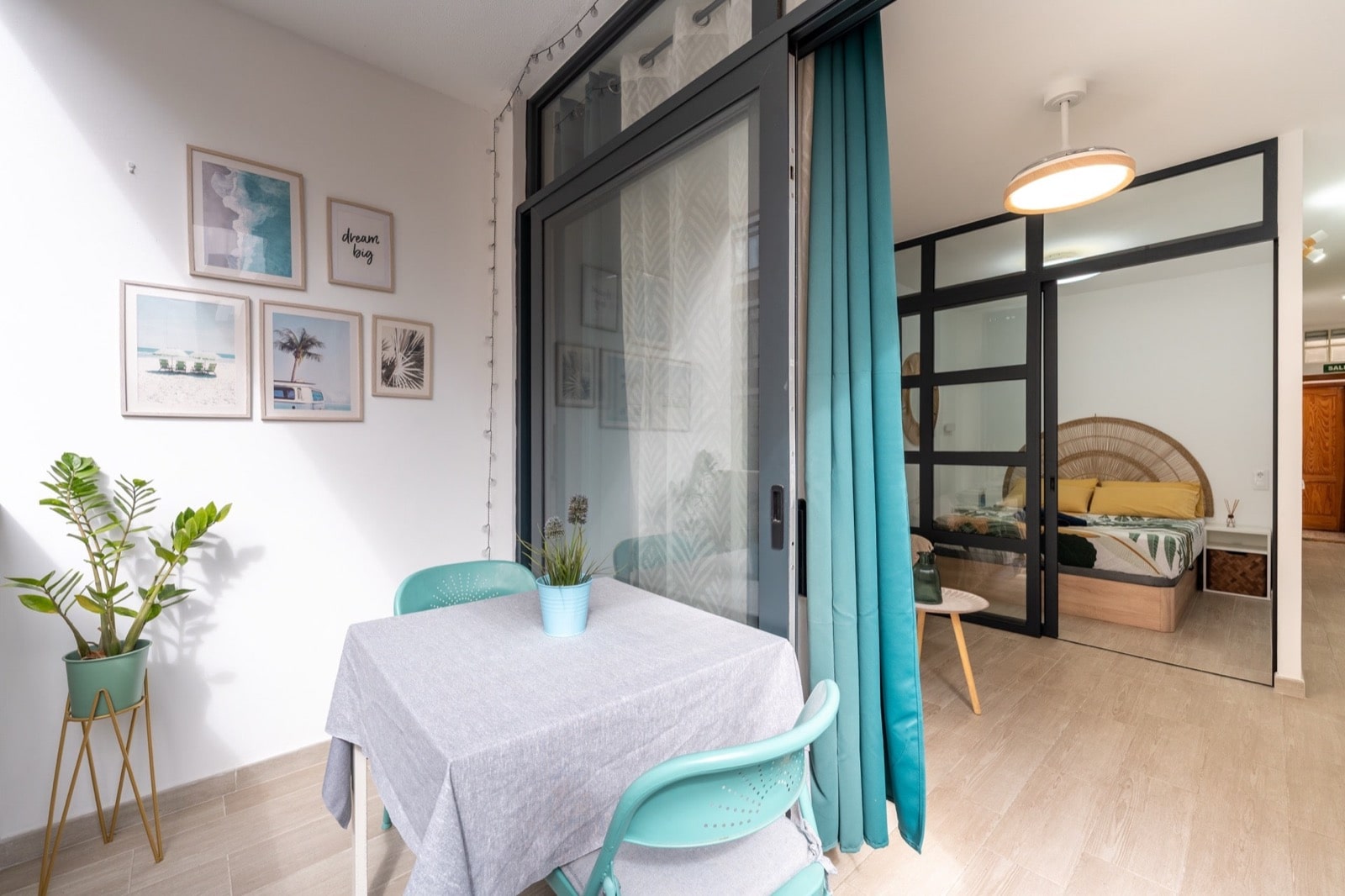
Casita Palmera is just 30 metres from Las Canteras beach, right on the seafront promenade. A fully equipped apartment from €90/night, it's the ideal base for discovering the island. [More information and bookings](/en).Weather and What to Pack
Gran Canaria has a subtropical climate that has earned it the nickname "a continent in miniature". The average annual temperature hovers around 22°C, and it rarely drops below 17°C or rises above 28°C on the coast.
Temperatures by Season
| Season | Temperature | Sea Water | Rain |
|--------|-------------|-----------|------|
| Winter (Dec-Feb) | 18-22°C | 19-20°C | Light |
| Spring (Mar-May) | 20-24°C | 19-21°C | Very rare |
| Summer (Jun-Aug) | 24-28°C | 22-24°C | None |
| Autumn (Sep-Nov) | 22-26°C | 23-24°C | Occasional |
What to Pack
- Light clothing: T-shirts, shorts, summer dresses. All year round.
- Swimwear: Essential in every month, including January.
- Sun cream: SPF 50+. The Canarian sun is deceptive -- the Atlantic breeze cools you down, but you burn just as fast.
- Comfortable walking shoes: Trainers or walking sandals for exploring.
- Light jacket: For evenings, especially November to March.
- Thin waterproof: Just in case, though rain is rare.
- You do NOT need: Heavy winter coats, snow boots, thick jumpers. Never.
Getting Around
Bus (Guaguas)
Public transport works well. Global operates across the island and Guaguas Municipales covers Las Palmas city routes.
- City fare: €1.40 per journey (less with a TransGC card)
- Frequency: Every 10-15 minutes on main routes
- Recommended app: Moovit for real-time schedules and routes
Taxi
Taxis are available 24 hours, with regulated meter fares. A journey within Las Palmas typically costs €3-8.
Car Rental
If you want to see the real island, rent a car for at least one day. From €20/day with companies like Cicar (local), Goldcar or Autoreisen. Roads are good and parking is plentiful outside the city centre.
On Foot
The Las Canteras area is very walkable. Everything you need -- beach, restaurants, supermarkets, pharmacies -- is within a 15-minute walk.
Important
Uber and Cabify do not operate in Gran Canaria. Only licensed taxis.Money and Costs
Payments
- Cards: Accepted nearly everywhere. Visa and Mastercard are universal.
- Cash: ATMs are widespread. Carry some cash for markets, small bars and tips.
- Contactless: Widely available in restaurants, supermarkets and shops.
Daily Budget Guide
| Style | Budget/Day |
|-------|------------|
| Backpacker | €50-70 (hostel, supermarket, bus) |
| Mid-range | €100-150 (apartment, restaurants, occasional excursion) |
| Comfort | €200+ (good accommodation, car, restaurants, activities) |
Tipping
Tipping is not mandatory in Spain. It's common to round up the bill or leave 5-10% for good service. In tapas bars, leaving the loose change is perfectly fine.
Reference Prices
- Coffee with milk (café con leche): €1.20-1.80
- Beer (caña): €1.50-2.50
- Lunch set menu (menú del día): €10-15
- Dinner for two at a restaurant: €30-50
- Litre of petrol: ~€1.40
Food and Drink
Must-Try Dishes
- Papas arrugadas con mojo: Small potatoes boiled in heavily salted water, served with red mojo (spicy paprika) and green mojo (coriander and parsley) sauces. The most iconic Canarian dish.
- Gofio: Toasted grain flour that has been a staple of the Canarian diet for centuries. You'll find it in desserts, soups and kneaded into balls.
- Queso de flor de Guía: An artisan cheese with protected designation of origin, set using thistle flower. Unique in the world.
- Sancocho canario: A hearty stew of salted fish with potatoes, gofio and mojo. Filling and delicious.
- Bienmesabe: An almond dessert made with palm honey, egg and lemon. Utterly addictive.
- Ropa vieja: Chickpeas with shredded meat in tomato sauce. Pure comfort food.
Where to Eat
The menú del día (set lunch menu) is your best friend: starter, main course, dessert, bread and a drink for €10-15. Available Monday to Friday in most restaurants, from 13:00 to 16:00.
Drinks
- Coffee: Strong coffee culture. Order a "cortado" (espresso with a dash of milk) or a "café con leche" (white coffee).
- Local wines: Try the wines from the Gran Canaria Denomination of Origin. Bodegas Agala and Frontón produce excellent volcanic wines.
- Water: Tap water is safe to drink but most locals drink bottled water for taste. In restaurants, ask for "agua mineral".
- Ron miel: A Canarian liqueur of rum blended with honey. Perfect as an after-dinner digestif.
Essential Apps and SIM Cards
SIM Card
If you're arriving from outside the EU or want cheap mobile data, buy a prepaid SIM card at the airport:
- Vodafone / Orange / Movistar: Available at airport shops and throughout the city.
- Price: €15-20 for 10-15 GB of data plus calls.
- Requirement: You'll need your passport to activate it.
- EU visitors: Your home tariff applies at no extra roaming cost thanks to EU regulations.
Must-Have Apps
- Moovit: Real-time bus schedules. Essential if you're getting around without a car.
- Google Maps: Works perfectly for navigation and public transport.
- WhatsApp: Everyone in Spain uses it. It's the primary communication method for businesses, restaurants and bookings.
- TripAdvisor: For finding restaurants and reading local reviews.
- Booking / Airbnb: For accommodation, though booking directly is usually cheaper.
WiFi
Most cafes, restaurants and accommodation offer free WiFi. 4G/5G coverage across the island is excellent.
Common Mistakes to Avoid
1. Only Visiting the South
Many tourists stay in Maspalomas or Playa del Inglés and never leave the resort. Gran Canaria is far more than package-holiday beaches: it has mountains, charming villages, local markets and a vibrant capital city.
2. Not Trying the Local Food
Skip the "international" restaurants on the tourist promenade and venture into neighbourhood bars. Papas arrugadas, queso de flor and sancocho are not found on generic tourist menus.
3. Not Renting a Car for at Least One Day
The island has 33 microclimates and landscapes that change every 20 minutes of driving. One day with a car lets you see Roque Nublo, Tejeda, Puerto de Mogán and the wild northern coast. Without a car, you miss roughly 70% of the island.
4. Underestimating the Sun
The Canarian sun is strong all year round, but the Atlantic breeze is deceptive. Use SPF 50+ sun cream from day one, even on overcast days. The worst sunburns happen when it doesn't feel hot.
5. Not Booking Restaurants at Weekends
Good restaurants in Las Canteras fill up on Friday and Saturday evenings. Book ahead, especially for dinner. WhatsApp is the quickest way to reserve.
6. Forgetting That Shops Close on Sunday
Most shops, except small supermarkets and tourist shops, close on Sundays. Do your shopping on Saturday. Large supermarkets (HiperDino, Mercadona) usually open on Sunday mornings.
FAQ
Is Gran Canaria safe?
Yes, very safe. Gran Canaria is one of the safest destinations in Europe. Crime rates are low and violent crimes against tourists are extremely rare. Apply the same common-sense precautions as anywhere: don't leave valuables visible in your car and keep an eye on your phone in crowded areas.Is tap water safe to drink?
Yes, it's safe, but it may taste different from what you're used to because it goes through a desalination process. Most residents drink bottled water by preference. An 8-litre bottle costs around €1 at the supermarket.Do I need a car?
It depends. If you're staying in Las Canteras and your plan is beach, restaurants and city life, you can get around perfectly on foot and by bus. But if you want to explore the island -- mountains, villages, remote beaches -- renting a car for at least a couple of days is absolutely worth it.What language do they speak?
Spanish is the official language. In tourist areas (both north and south), English is widely spoken in hotels, restaurants and shops. German is also common in the south. Learning "hola" (hello), "gracias" (thank you) and "por favor" (please) in Spanish is always appreciated.What's the best time to visit?
Gran Canaria is a year-round destination. That said:
- Best beach weather: June to October (warmest sea water, constant sunshine)
- Best for hiking: November to March (cooler mountain temperatures)
- Cheapest: October-November and February-March (outside peak season)
- Liveliest: February-March (Las Palmas Carnival, one of the world's biggest)
- Avoid if you want peace: Easter and Christmas (maximum occupancy)