Overview
Gran Canaria and Tenerife are the two largest and most visited islands in the Canaries, together welcoming over 10 million tourists per year. Both offer sun, sea and volcanic landscapes, but the experiences they deliver are remarkably different.
Gran Canaria is the all-rounder. It combines a vibrant capital city of 380,000 people, world-class beaches, spectacular mountains and genuine urban infrastructure. This is the island where you can surf in the morning, eat at a traditional market for lunch and go tapas-hopping through the historic Vegueta quarter in the evening -- all without getting in a car. Tenerife is the island of extreme contrasts. It has Mount Teide (3,718 m), the highest peak in Spain, prehistoric laurel forests in Anaga and mega-resorts in the south. It is larger in area (2,034 km² versus Gran Canaria's 1,560 km²) and its offering is more polarised between raw nature and resort tourism.If you want an island that has everything in balance, Gran Canaria is the pick. If you are coming specifically for Teide or large-scale resort complexes, Tenerife has the edge in those two respects.
Beaches
Gran Canaria
Gran Canaria is known as the "miniature continent" and its beaches reflect that diversity:
- Las Canteras (Las Palmas): 3.2 km of golden urban beach, sheltered by a natural reef bar. A surf zone at La Cicer, a calm family-friendly lagoon in the centre and a genuinely local atmosphere. Regularly rated among the best urban beaches in Europe
- Maspalomas: 8 km² of desert dunes rolling down to the ocean. A unique landscape with nudist areas and endless walks
- Anfi del Mar: White sand imported from the Caribbean, crystal-clear waters and an exclusive feel
- Gui Gui: A wild beach accessible only on foot or by boat, for the adventurous
- Amadores: A family-friendly cove with calm water and full amenities
All told, Gran Canaria has more than 60 beaches spanning golden sand, black volcanic sand and white sand.
Tenerife
- Las Teresitas (Santa Cruz): A 1.5 km beach with golden sand imported from the Sahara in the 1970s. Attractive but artificial
- Los Cristianos / Las Americas: Tourist-focused beaches in the south, busy and resort-oriented
- Benijo: A dramatic black-sand beach in the north, stunning but with strong currents
- El Medano: Popular with windsurfers and kitesurfers
Weather and Climate
Both islands enjoy the famous Canarian "eternal spring", but there are subtle differences worth noting.
Gran Canaria
- Average annual temperature: 22 °C
- Las Palmas: One of the sunniest cities in the world with over 2,800 sunshine hours per year
- Sea temperature: 19-23 °C depending on the season
- Rainfall: Concentrated in November to February, sparse in the capital
- Microclimates: 14 distinct microclimates across the island
Tenerife
- Average annual temperature: 22-23 °C
- South (Adeje / Arona): Marginally warmer, almost cloud-free
- North (Puerto de la Cruz): Cooler, greener, cloudier
- Sea temperature: 19-24 °C
- Microclimates: Pronounced difference between north and south thanks to Teide blocking the trade winds
The differences are minimal. The south of Tenerife has a slight edge on guaranteed sunshine, but Las Palmas de Gran Canaria compensates with its east-facing position, which catches the first hours of sun and is sheltered from the alisio trade winds.
Weather verdict: Draw. Both islands are excellent year-round. If wall-to-wall sunshine is your priority, head south on either island.Nightlife and Dining
Gran Canaria
Las Palmas de Gran Canaria has the advantage of being a real city, not an artificial tourist zone:
- Vegueta: The historic quarter with wine bars, terraces and a bohemian atmosphere
- Mesa y Lopez / Santa Catalina: Upscale restaurants and cocktail bars
- La Cicer: Surf bars, oceanfront terraces and live music
- Triana: Pedestrianised street lined with tapas bars, gelaterias and evening strollers
- Cuisine: From traditional Canarian dishes to Peruvian, Japanese and Italian restaurants. Mercado del Puerto for fresh seafood
- Prices: A beer EUR 1.50-2.50, dinner for two EUR 30-50
Tenerife
- Playa de las Americas: The main party strip, dominated by British-style pubs, nightclubs and karaoke. Very touristy
- La Laguna: University town with a youthful buzz, UNESCO World Heritage listed
- Puerto de la Cruz: Quieter, charming restaurants in the north
- Cuisine: Excellent guachinches (rustic wine taverns) in the north. Less international variety than Las Palmas
- Prices: Similar to Gran Canaria in local areas, higher in southern resorts
Nature and Hiking
Tenerife
- Teide: Spain's highest peak (3,718 m), a UNESCO World Heritage Site. The lunar landscape of the national park is breathtaking. A permit is required to reach the summit
- Anaga: Laurel forests dating back over 40 million years, a designated Biosphere Reserve. Spectacular trails such as the Chamorga route
- Masca Gorge: An iconic hiking route (closed and reopened multiple times)
- Los Gigantes Cliffs: 600 m vertical walls plunging into the sea
Gran Canaria
- Roque Nublo: A volcanic monolith at 1,813 m, the island's symbol. An easy 3 km return hike
- Tamadaba: Canarian pine forest with views across to Teide on clear days
- Barranco de Guayadeque: Inhabited caves, troglodyte restaurants and archaeological sites
- Caldera de Bandama: A volcanic crater 1 km in diameter with vineyards at the bottom
- Maspalomas Dunes Natural Reserve: A unique coastal dune ecosystem
Digital Nomads and Remote Work
Gran Canaria
Las Palmas has established itself as one of Europe's leading digital nomad hubs:
- NomadList ranking: Consistently in the global top 10
- Coworking spaces: More than 15 spaces across the city (The House, Soppa de Azul, iMeridiano, Talleres Palermo)
- Internet: Fibre optic at 600 Mbps+ city-wide
- Community: Weekly meetups, Facebook groups with 15,000+ members, networking events
- Average monthly cost: EUR 1,200-1,800 including accommodation, food and coworking
- Cafes with wifi: Dozens of options along the Las Canteras promenade
Tenerife
- Growing scene but still smaller than Las Palmas
- Coworking: Mainly in Santa Cruz and Puerto de la Cruz, less variety
- Community: Active groups but less critical mass
- Average monthly cost: EUR 1,100-1,700, slightly cheaper outside tourist zones
Cost Comparison
Prices are broadly similar between the two islands, but Gran Canaria offers better value in the capital.
| Category | Gran Canaria (Las Palmas) | Tenerife (tourist areas) |
|---|---|---|
| Accommodation (apartment / night) | EUR 70-120 | EUR 80-140 |
| Coffee (flat white) | EUR 1.30-1.80 | EUR 1.40-2.00 |
| Beer in a bar | EUR 1.50-2.50 | EUR 2.00-3.50 |
| Dinner for two | EUR 30-50 | EUR 35-60 |
| Car hire / day | EUR 25-45 | EUR 25-45 |
| Urban bus | EUR 1.40 | EUR 1.45 |
| Taxi airport to centre | EUR 35-45 | EUR 50-70 |
| Poema del Mar entry | EUR 25 | -- |
| Siam Park entry | -- | EUR 40 |
| Beach restaurant lunch | EUR 12-18 | EUR 15-22 |
Price verdict: Gran Canaria is slightly cheaper for accommodation and eating out, particularly if you stay in Las Palmas rather than the southern tourist zones.Families
Gran Canaria
- Poema del Mar: Modern aquarium with sharks, jellyfish and Atlantic ecosystems. EUR 25 adults, EUR 17.50 children
- Palmitos Park: Zoo and botanical garden with dolphin and bird shows. EUR 34 adults
- Sioux City: Wild West theme park with live shows
- Family-friendly beaches: Las Canteras (sheltered lagoon), Amadores (calm water)
- Museo Elder: Interactive science and technology museum, ideal for children
Tenerife
- Siam Park: Widely considered Europe's best water park. EUR 40 adults, EUR 28 children
- Loro Parque: Zoo featuring orcas, penguins and parrot shows. EUR 38 adults
- Jungle Park: Animal and nature park in the south
- Family-friendly beaches: Los Cristianos, Las Teresitas
- All-inclusive resorts: Wider selection of hotels with kids' clubs and entertainment programmes
Getting There
Gran Canaria (LPA Airport)
- Direct flights: From more than 90 European destinations
- Airlines: Ryanair, Vueling, EasyJet, Iberia, Transavia, Norwegian, Jet2, TUI
- Frequency: Multiple daily flights from Madrid, Barcelona, London, Berlin, Amsterdam
- Single airport: Code LPA, 25 km from Las Palmas
- Inter-island connections: Fred Olsen and Naviera Armas run ferries to Tenerife (80 minutes, from EUR 30)
Tenerife (TFS and TFN Airports)
- Two airports: TFS (south, international flights) and TFN (north, domestic and some European connections)
- Direct flights: From more than 100 European destinations (combining both airports)
- Airlines: The same as Gran Canaria, plus Wizz Air
- Advantage: Greater total capacity with two airports
- Inter-island connections: Ferry to Gran Canaria from Los Cristianos or Santa Cruz
Our Verdict
After living in the Canaries and getting to know both islands inside out, our conclusion is clear:
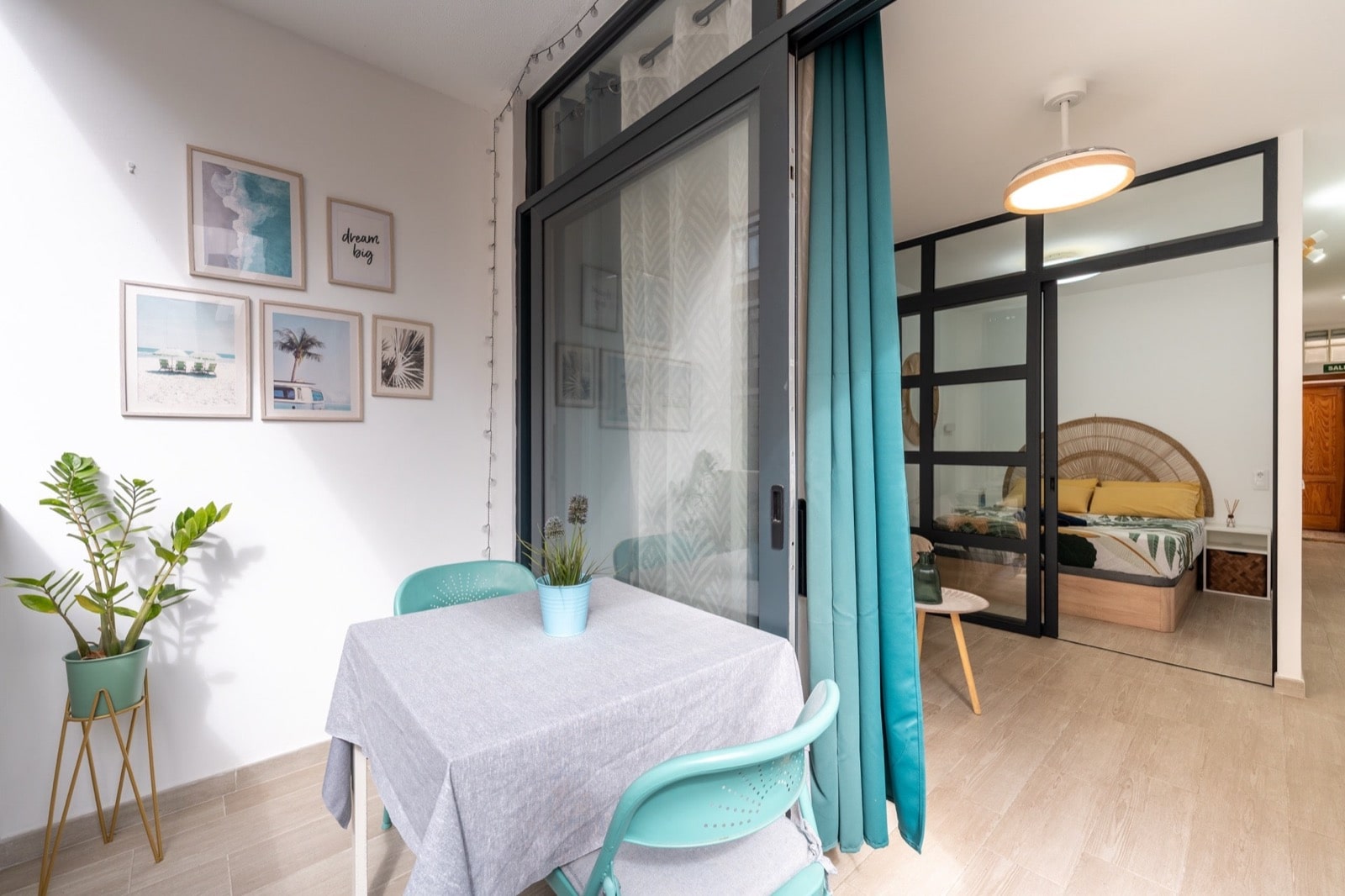
Gran Canaria is the best all-round island in the Canaries. It strikes the perfect balance between city, beach and nature. In Las Palmas you get a genuine urban experience -- restaurants, culture and nightlife -- while being steps from one of the finest beaches in Europe. Choose Tenerife if: your priority is climbing Teide, you want a large-scale all-inclusive resort, or Siam Park is a must for the kids. Choose Gran Canaria if: you want a more authentic experience, you value gastronomy and nightlife, you are a digital nomad, you want great beaches without sacrificing city life, or you are looking for the best value for money.Our recommendation is straightforward: base yourself at Las Canteras. From our Casita Palmera, just 30 metres from the beach, you will have access to everything that makes Gran Canaria special:
- The beach on your doorstep every day
- Restaurants and nightlife within walking distance
- Coworking spaces and fast wifi for remote work
- The entire island accessible by car or bus
- And if you fancy visiting Tenerife, the ferry takes just 80 minutes
Frequently Asked Questions
Can you visit both Gran Canaria and Tenerife on the same trip?
Absolutely. Fast ferries operated by Fred Olsen connect the two islands in 80 minutes from Agaete (GC) to Santa Cruz (TF). Tickets start at EUR 30 each way. There are also 15-minute inter-island flights with Binter from EUR 25.
Which island has better weather in winter?
Both are excellent in winter with temperatures of 20-24 °C. The south of Tenerife has marginally fewer clouds, but Las Palmas de Gran Canaria enjoys more total sunshine hours than Santa Cruz de Tenerife thanks to its east-facing orientation.
Where is it easier to get around without a car?
Gran Canaria, specifically Las Palmas. The city is walkable, the urban bus network works well, and Las Canteras, Vegueta and all the main attractions are connected on foot or by bus. On Tenerife you need a car for almost everything unless you stay in one of the southern resort areas.Which is better for a romantic getaway?
Gran Canaria. The combination of sunsets at Las Canteras, dinners in Vegueta, strolls along Triana and the variety of the food scene make Las Palmas a superior romantic destination. Tenerife has good hotels but lacks the charming urban atmosphere.Can you do Teide as a day trip from Gran Canaria?
Yes, but it makes for a long day. The ferry from Agaete to Santa Cruz takes 80 minutes, then you need about 1.5 hours by car to reach Teide National Park. It is doable but exhausting. If Teide is a priority, we would recommend spending at least one night on Tenerife.